
*This has been posted before on this account but we wanted to bring it to your attention again, especially as outdoor places start opening up again. Please follow the guidance given here and do your research – it is expected that places like this will be busier than normal as there are limited places open so please be careful. But most importantly, have fun being in the great outdoors!*
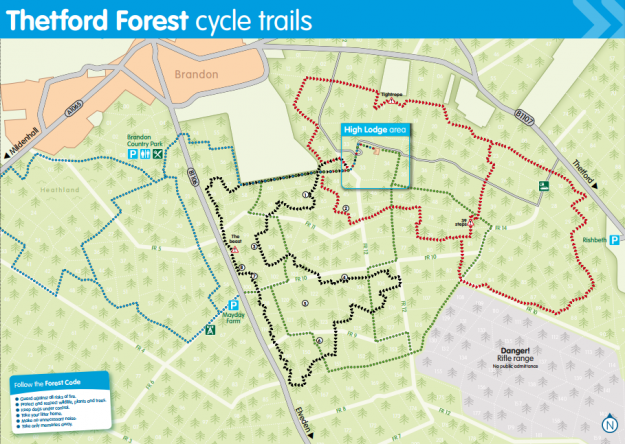
Trail Centres can be very intimidating places if it’s your first visit, but in reality they are generally welcoming places catering for a large range of abilities. In this post we’ll go over the basics and what to expect at a few different types of trail centre across the U.K.
Terminology
- Trail – Dedicated track designed for cycling/mountain biking
- Grading – Difficulty of any given trail
- Singletrack – Generally narrower sections of trail designed to be ridden in one direction only
- Uplift – A service provided at some Trail Centres/Bikeparks where rider and bike are transported uphill to the top of a Downhill trail
- E-Bikes – Bicycles with an electrical pedal assistance, making riding up inclines and longer distances easier
Grading
Mountain bike trails are graded in a similar fashion to ski slopes, with coloured markings indicating difficulty and danger. The headings you will generally encounter within the U.K. are:
- Green – The shortest and mellowest trails, geared towards beginner riders and younger children, can be paved, gravel or dirt.
- Blue – Slightly longer but generally mellow trails, geared towards family groups and less experienced riders, generally on gravel.
- Red – More difficult terrain, consisting mainly of dirt singletrack, containing steeper gradients and obstacles, geared towards more experienced riders with higher levels of skill and fitness. Most difficult obstacles/features can generally be bypassed.
- Black – More technical terrain with harder obstacles and harsher gradients, for experienced riders with good fitness levels. Obstacles generally unavoidable.
- Orange (One, two or three spots) – The most difficult grading of trail, generally consisting of downhill tracks with mandatory drops and jumps For only the most experienced riders. Spots indicate severity of the trail, with one being the least and three being the most.
Trail centres vs Bikeparks
Despite using the same grading system, trails found at trail centres such as those owned and operated by the national trust and the forestry commission are generally easier than equivalent grading at Bikeparks, so are generally a better place to start out. Bikeparks do generally have a wider variety of shorter trails, that are often uplift serviced.
Bikes
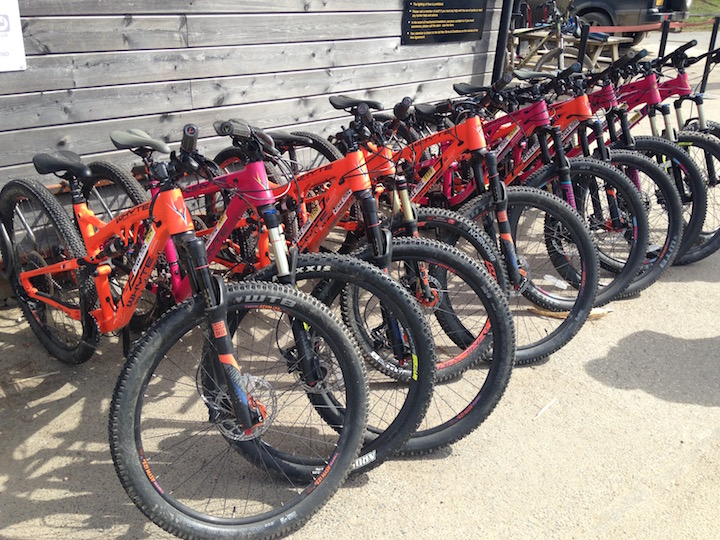
For Green and Blue trails, pretty much all bikes in good working order outside of dedicated road bikes will be appropriate, as will kids bikes and tag-alongs. For Red trails, bikes with at least front suspension are recommended for comfort and safety. For black and Orange trails good quality bikes are a necessity. If your bike doesn’t fit the bill or you have no bike at all, most good Trail centres will have rental centres with a good range of standard and E-bikes that will be appropriate for the centres trails. Regardless of the bike or trail, a helmet is a necessity.
Etiquette
The vast majority of etiquette is that of other outdoor activities, but here are a few do’s and dont’s:
- Always wear a helmet
- Ensure the trail is left litter free
- Only ride singletrack in the intended direction
- If stopped, ensure both you and your bike are off the trail.
- If being followed by a faster rider, continue at your own pace until you find a safe place to stop or the rider behind announces they will pass
- If following a slower rider, slow to their pace and announce the side you plan on passing on when you reach a safe place
Enjoy!
Zoe and David x
Written by David
 Not-So-Trendy Travellers
One thought on “UK Trail Centres – An introduction”