
Hello all, and welcome to a slightly different blog post today. Some of you may love the change of posts, others might hate it but it is a subject that is really important to David and I (and should be important to everyone!).
On the 22nd of August this year (2020), Earth Overshoot Day was upon us. For those of you who don’t know what that is, it is the day ‘when humanity’s demand on nature exceeds what Earth’s ecosystems can renew in a year’. In other words, that’s really not great and certainly not a sustainable way for us to live as a society.
So what can we do about this?
Whilst we can’t change the way big multinational companies operate (yeah they’re MAJOR contributors of waste and are unlikely to do anything about it any time soon as it’s cheaper to use materials like plastic rather than glass), we as individuals need to start changing the way we consume the worlds resources in such a careless way.
Travelling can create some of the worst scenarios for waste because you are away from home and treating yourself which, if you’re not mindful, can be a huge waste-generator.
Below are just some ideas of products that promote a zero-waste lifestyle, meaning they are a far better option for the world.
Yes it may be rather expensive to buy all these things at once, so pick and choose the items you think you will get the most use out of first – the others can be ideas for your Christmas / birthday presents!
At the bottom of this post there is also a few other things to consider when travelling to reduce your environmental impact even more.
As always, hope you find some inspiration from our list and feel free to contact us with any other ideas you may have, the more the merrier!
Products
Reusable shopping bags
There are SO MANY options for types of reusable shopping bags, and all of them pack up nice and small so they can be shoved in your suitcase / carry on easily. Here are some examples:
- Mesh produce bags – You can now pick these up at some Sainsbury’s stores in the UK, I haven’t gone there for a while because coronavirus, but once I start going out and shopping again I will make sure to get some. There are also plenty on offer online, but it is always better to buy local if you can to minimise negative environmental impact. You could also make your own but the fabric can be a bit hard and slippery to sew (I don’t think my limited sewing skills are ready for that yet!)
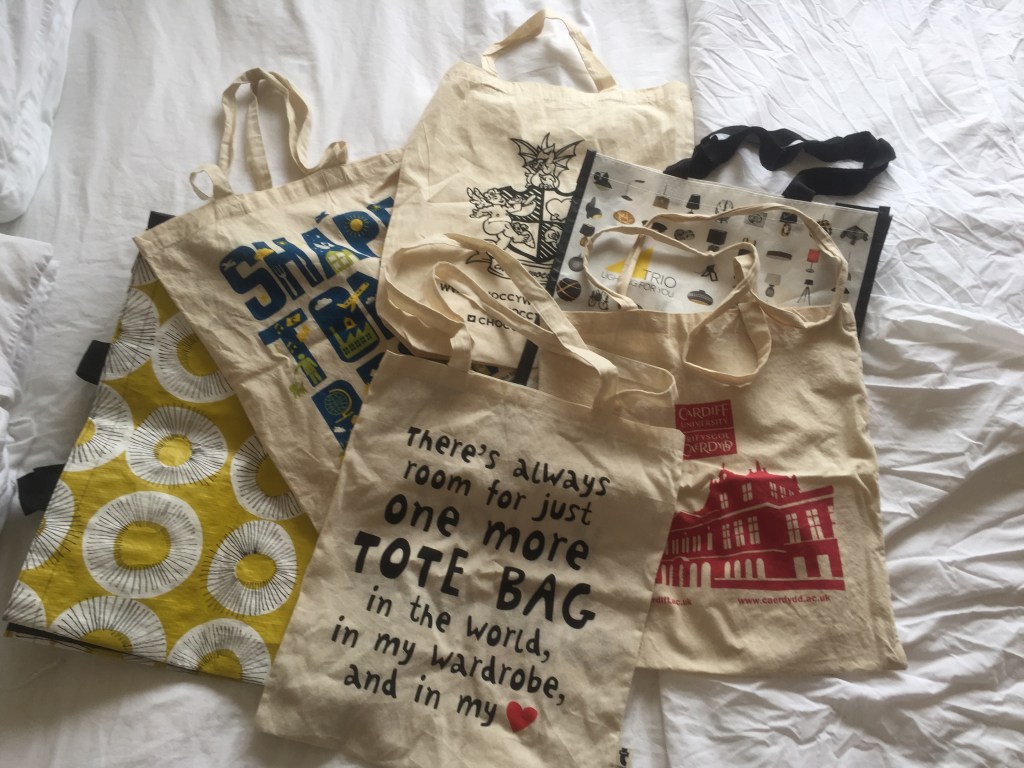
- Tote bags – I got most of mine from the many university open days I attended a couple of years ago – pretty much every one shoved a uni-branded tote bag filled with ‘ welcome gifts’ in my hand before I got through the gates. What I’m saying is that so many people have at least one of these bags knocking around somewhere so make use of it! If you do need to buy one, again try and buy local if you can to reduce your carbon footprint.
- Foldaway bags – I personally don’t have any of these (because I pretty much exclusively use tote bags) but my mum always carries one in her handbag. You can get ones that pack away super small which is perfect for people with little storage, and they are also plenty of simple DIY videos online to make them (you just need basic sewing machine skills).
- Bags for life – These are another one of those bag types which EVERYONE seems to have tucked in a cubbyhole somewhere. They are generally on the slightly bigger side even once folded so may not be as practical as the options above but they fold flat. And you know how this goes now – ALWAYS USE WHAT YOU ALREADY HAVE FIRST!!!
Eco-friendly toiletries
There are quite a few sub-categories within toiletries, so I have made a little sub-heading for each below.
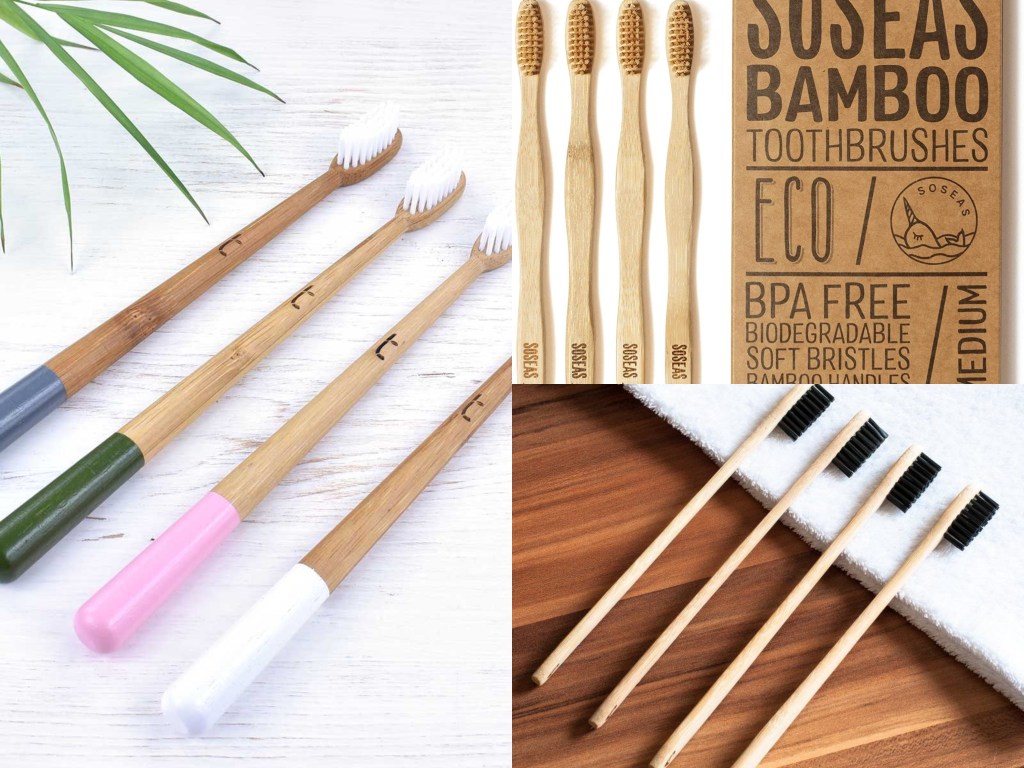
Bamboo toothbrush
Plastic toothbrushes are sourced from non-renewable fossil fuels such as oil and coal, and the plastic they are made from hangs around in landfill for a VERY long time (I’m talking at least 400 years here, have a look at the link if you don’t believe me).
Bamboo toothbrushes are biodegradable and are made of plants and so are made from a renewable material. Bamboo is one of the fastest growing plants in the world, so it won’t be running out any time soon.
The bristles are generally made of nylon which is not biodegradable but can be recycled, so to dispose of the brush you must remove the bristles first. Whilst they are not 100% biodegradable, it is still worth making the switch because it is so much better than having a whole plastic toothbrush in landfill.
It is recommended you change your toothbrush every 2 months at least, however that doesn’t mean you should just throw your old one away. Old brushes can be used to clean shoes, bathroom tiles, cleaning cutlery… the options are endless!
Bar soap
Did you know that the carbon footprint of liquid soaps is about 25% larger than that of bar soaps on a per wash basis? (see study here). So, it definitely makes sense so make the swap to bar soaps right?
However, one thing I hadn’t even considered until writing this post was the fact that most traditional bar soaps are made from fats and oils from farmed crops which has a significant environmental impact on land. For example, oil plantations are slowly creeping into rainforests which are major carbon stores and home to many endangered species.
So which one should you choose?
Personally, I would say bar soap because of the carbon footprint fact stated above for a start. There are also ways in which you can reduce the environmental impact even more, such as:
- Looking for soaps in minimal packaging – some local soap makers may sell their soap with no packaging at all!
- Avoid potentially hazardous chemicals by selecting a natural bar soap. The 4 common chemical ingredients to avoid are Triclosan; Parabens; Sulfates; and Fragrance
- Buy locally made soaps to reduce the soap’s transportation footprint. I will be getting my next batch from The Maldon Soap Company – they have so many to choose from!
- Avoid soaps made with palm oil
- Keep your bar of soap out of water in between uses to make it last longer. 1 way to do this is using a soap dish with drainage holes
- Cut your soap bar into smaller pieces and use 1 at a time. The pieces that aren’t being used aren’t being exposed to any water or humidity so it will last longer
- Push leftover soap slivers into a new bar after the first time you use it
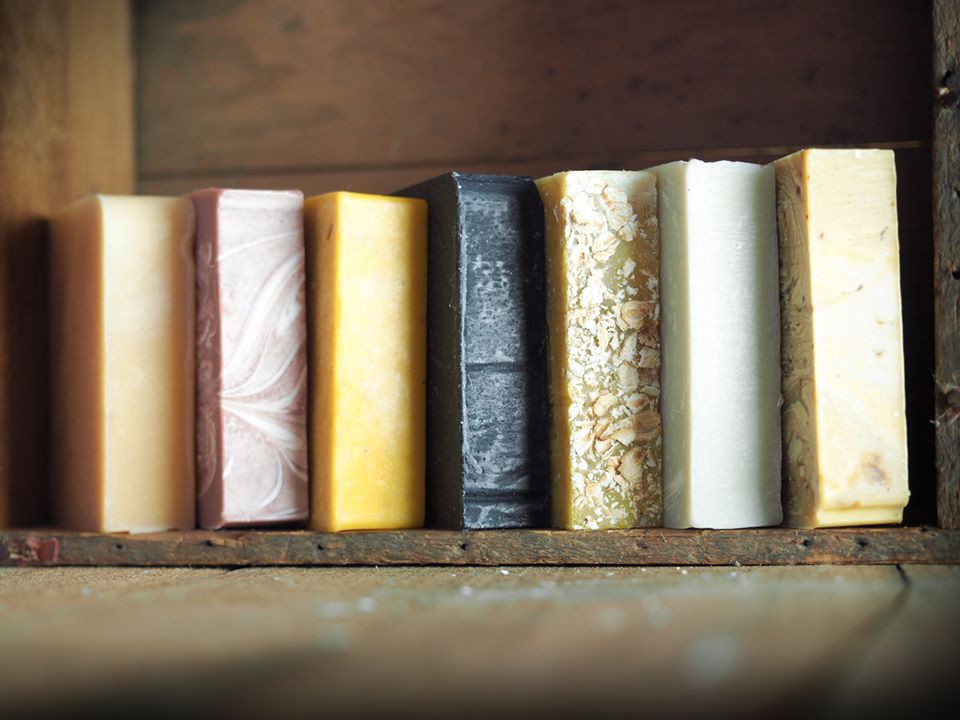
Photo taken from here
Shampoo & conditioner bars / refillable travel bottles
Going on a plane with hand luggage only presents a problem what it comes to travel – you can only bring 100ml containers… Every timeyou go into Boots or Superdrug in the summer time you are met with the rack of miniature body products of the giant brands, all suitable for airplane travel. I can see how this is a convenient option, but THINK OF THE WASTE. You can’t get in to those mini bottles and refill them once you are finished, so they just get binned.
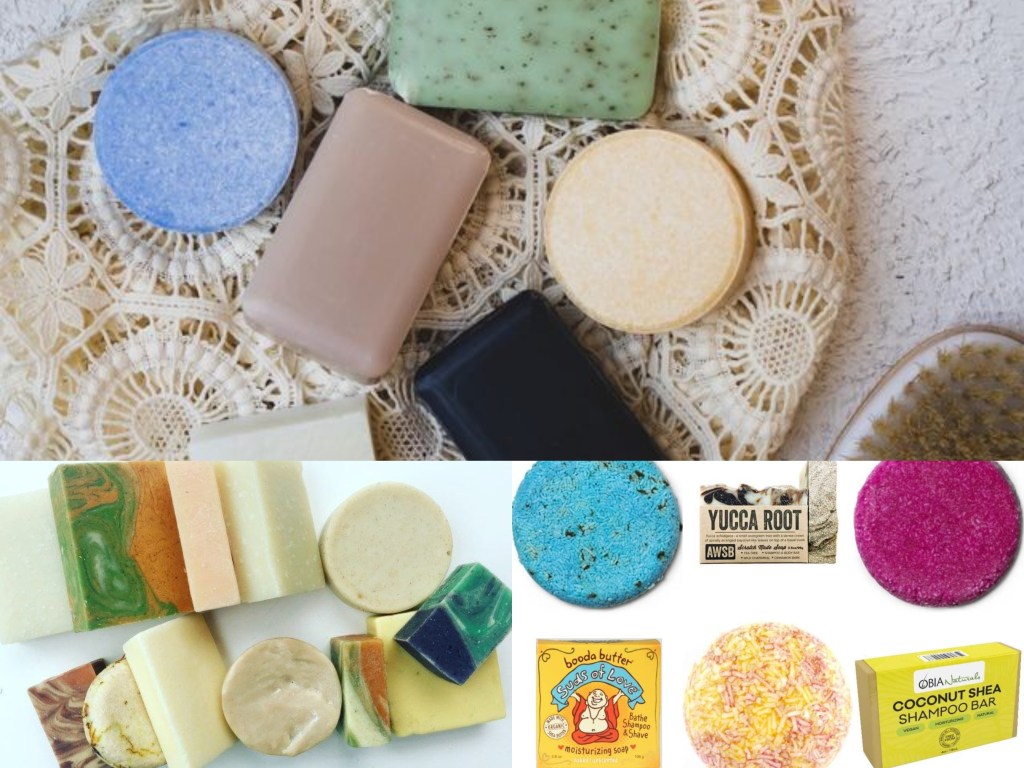
There are 2 ways around this. One is to buy some of those refillable travel bottles that you can literally get from anywhere. These can be reused again and again, just fill with your favourite shampoo etc. from a full sized bottle.
The second (and arguably better) option is to ditch plastic bottles all together. As you probably already know, a lot of plastic can’t be recycled and the plastic that can loses its value every time it is recycled.
But how do you ditch plastic bottles all together? By using shampoo and conditioner bars!
There are so many out there to choose from, it can be a bit of a minefield. I have to admit I haven’t actually used these yet (as I have about 3 bottles of shampoo in Cardiff still and a few here as well…) but I want to. I am still trying to work out what a ‘good value’ shampoo bar looks like, but once I know I’ll be sure to share with you!
Reusable makeup pads
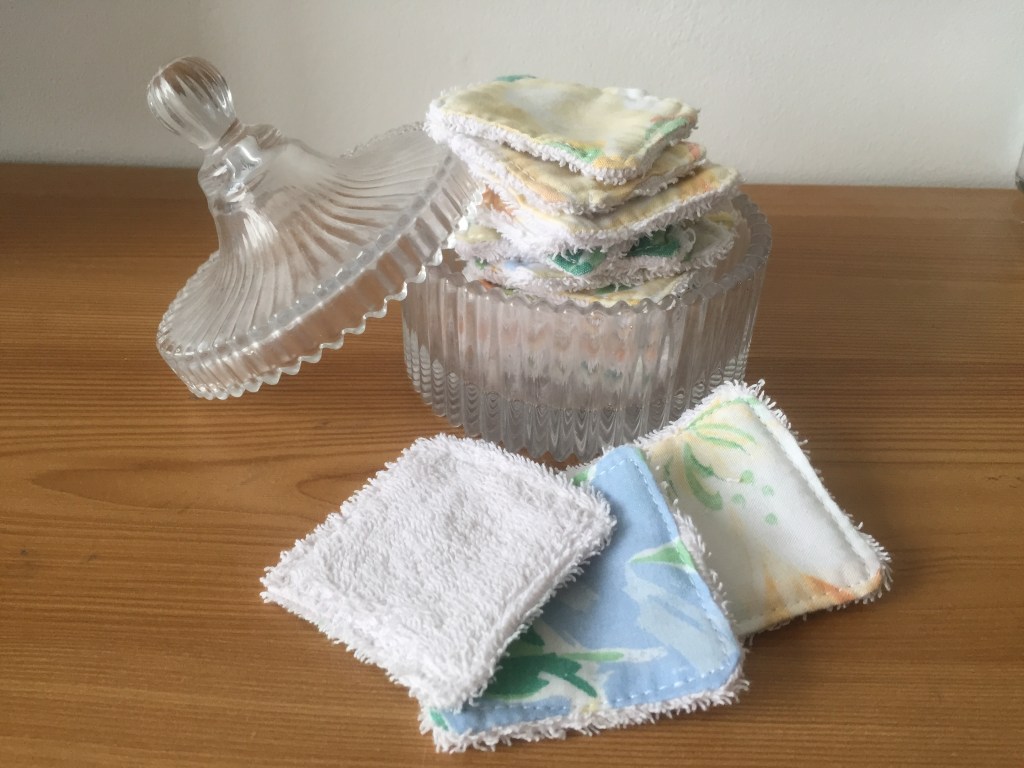
These are SO EASY TO MAKE I literally made 12 in like an hour and I am SLOW at sewing… I followed the instructions on Happiest Camper’s post and these are great because you can use old towels and scraps of fabric you have lying around.
All you need is some liquid makeup remover and you’re good to go! Once you have used them they can be popped in the wash at 40°C and left pegged up to dry.
If you really don’t feel confident sewing you can get reusable cotton rounds online, but it is better to see if there are any shops locally that sell them first.
Food-related
Reusable water bottle
This was the first zero-waste swap I made back in the day, and I haven’t looked back since.
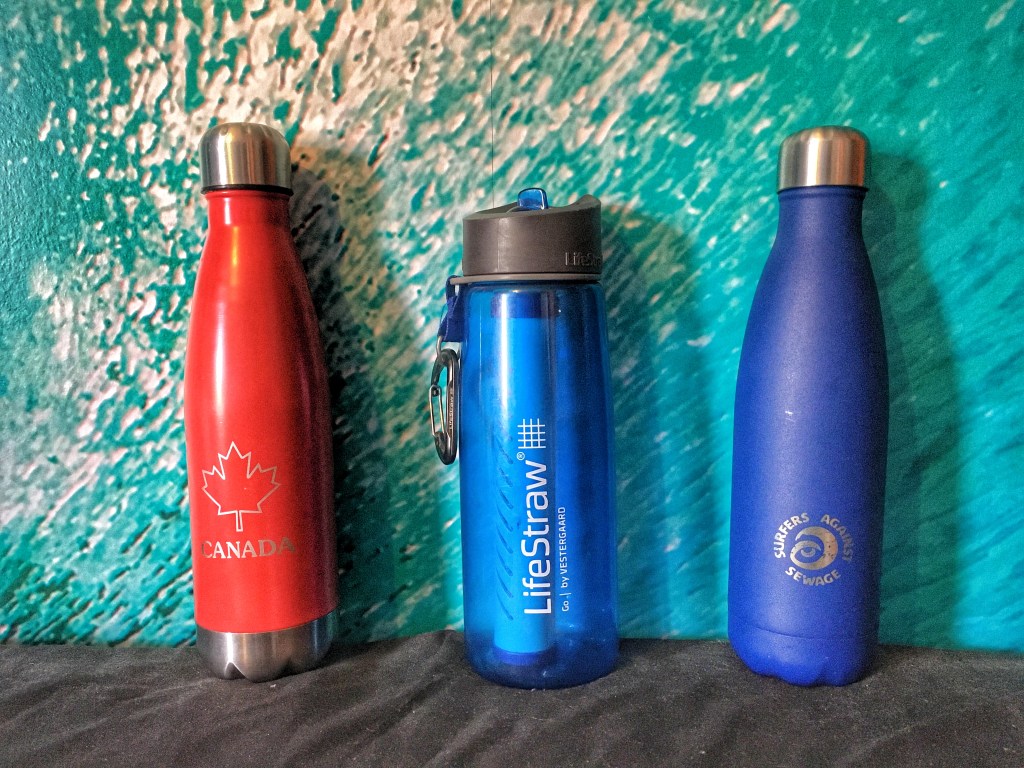
David is fancy and has a Chilly’s bottle which keeps water ice cold for a loonnngggg time which is great, plus it is really sturdy and has lasted really well. His bottle is a limited edition collaboration with Surfers Against Sewage which is a really cool charity (but more on these in a later post..!).
I actually got my bottle when I was in Canada and it is part of the Pure brand. I haven’t timed the exact time it takes for my water go to warm but I can tell you it does a pretty good job at keeping water cool even when it’s been out in the sun for a while.
Even a sturdy plastic water bottle you probably have in the back of your cupboard is better than a single use one, however if you are going to buy I new one a highly recommend a thermal metal one (or a LifeStraw Go or similar, see below).
Thermal flask
A thermal flask can also be a good investment if hot drinks are your thing. I’ve got this one from LifeVenture which is screw top and so it is totally leak-proof. I use every day at uni and it keeps my tea/coffee (okay, and sometimes hot chocolate) piping hot for at least 4 hours.
A lot of coffee places will be happy to fill up your flask rather than giving you a takeaway cup which is great for the environment, and they may even offer you some money off!
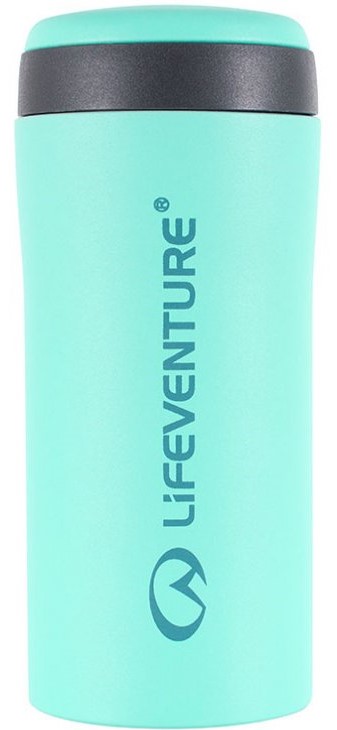
Photo taken from here
Reusable straws (& filtered water bottles)
David and I find it easiest to just ask for drinks without straws in English-speaking places because we prefer to drink without straws anyway. But, if you do want to use a straw there are a couple of more sustainable ways of going about it.
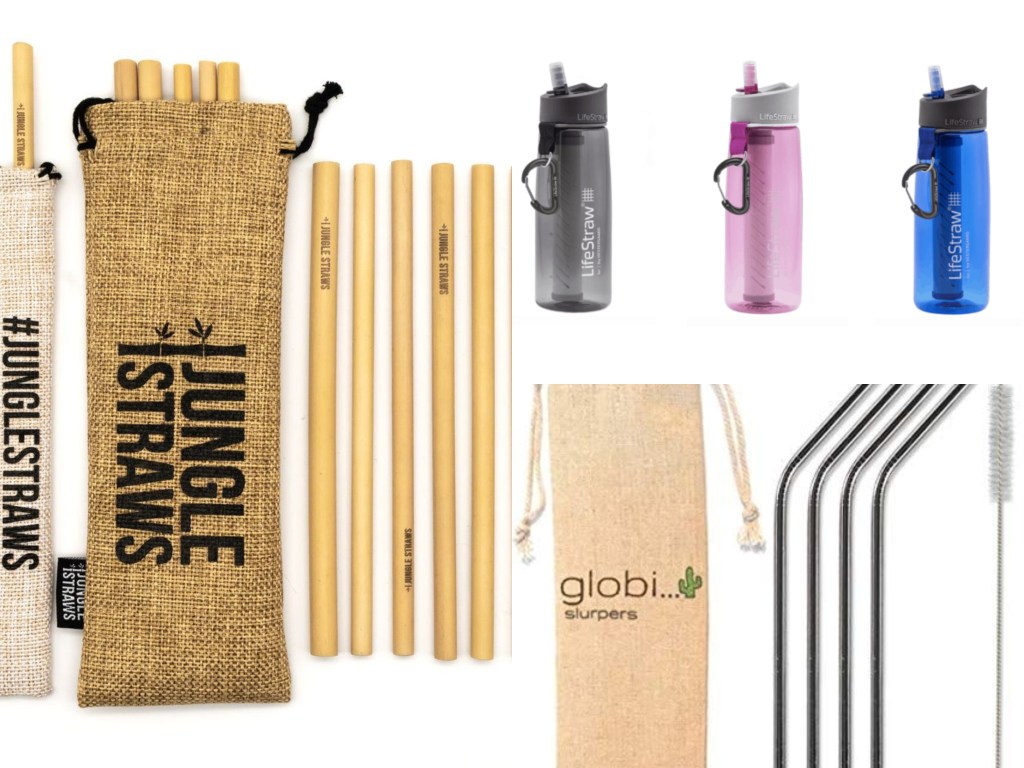
You could invest in some reusable straws which are either metal or could also be made from bamboo. I have some metal straws at home that came with a handy cleaning brush, but if I’m honest they don’t get used that often. However, I have set a personal goal for once I start getting out again to always carry a set of reusable cutlery with me, including a metal straw (but more on that below).
Alternatively, a filtered water bottle is a really good investment if you are going to areas that don’t have safe drinking water. David has a LifeStraw Go, and it proved an absolute lifesaver in his travels across Mongolia and China (more on that to come in a future series). The Charcoal filter ensures that the water is safe to drink and removes the need for single use plastic bottles when travelling. LifeStraw’s Giving Back Programme also means that for each bottle purchased, LifeStraw will provide safe drinking water to a child for a year.
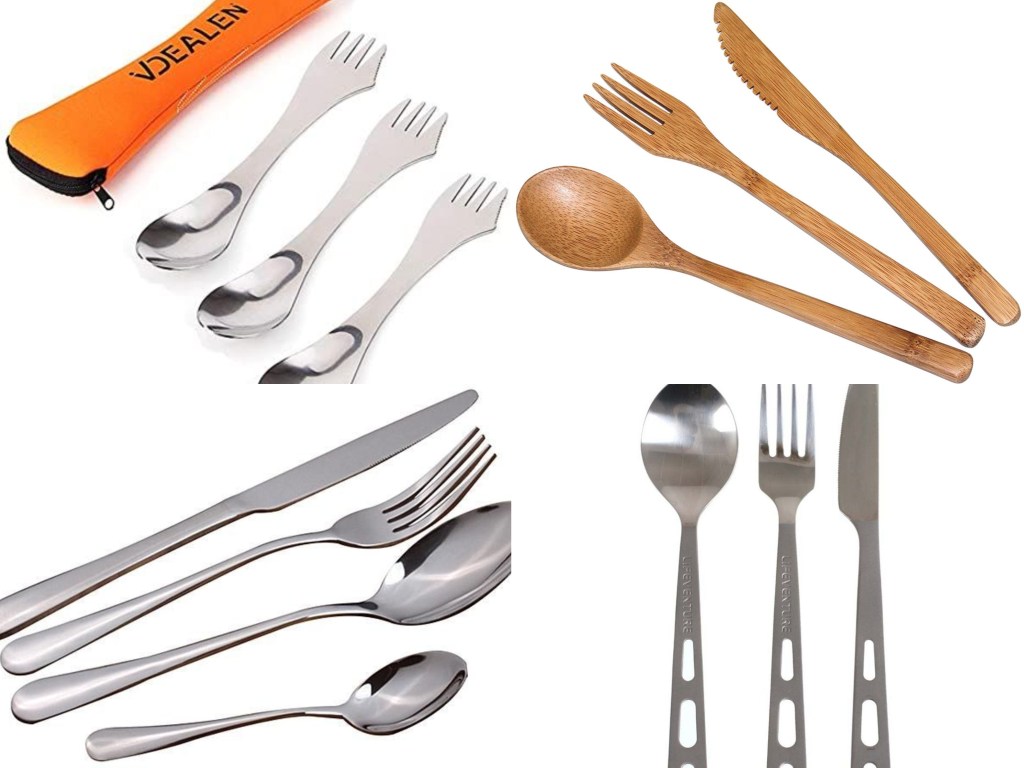
Cutlery
When one goes camping one needs to remember cutlery, but when else do you carry cutlery around? Well, your answer is soon going to be ALL THE TIME because you never know when you’re going to need a fork for an impromptu fish and chips on the beach or a spoon to get all the cream out from the bottom of your iced latte…
Whilst you could go out and buy some fancy bamboo cutlery, a space-saving spork, or super light titanium cutlery (I have a set of these from my DofE days), what about all that your spare set of stainless steel cutlery you have in the cutlery drawer already? Any knife, fork and spoon will do, and you can keep them all together in a cute cutlery pouch along with a cloth napkin and even a reusable straw!
Reusable food storage
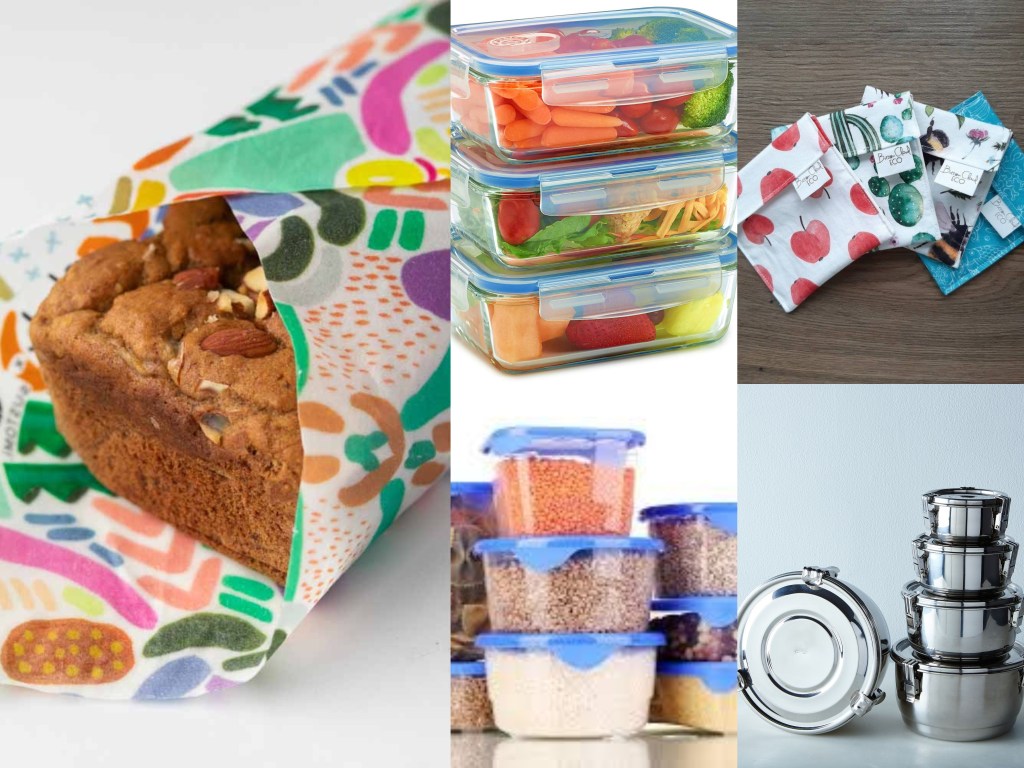
Until recently, whenever we travelled and made packed lunches, we used plastic sandwich bags that we reused throughout our holiday. Not the most eco-friendly option I know, which is why I want to change that for the future.
My friend Sana gifted me a beeswax wrap for my birthday back in April and, although I haven’t actually ‘travelled’ with it yet, I love using it especially when going on socially distanced picnics with friends.
There are a variety of different wraps available, from Velcro squares to cloths tied with string. The most common choice does seem to be beeswax wraps which you can buy in loads of places, both online and in local shops. However, they are also really easy to make yourself, and you can view a tutorial here. They are great for wrapping up a round of sandwiches for your lunch box, and can be wiped with COOL water to clean.
Another food container that I want to try and make in the future are reusable snack bags. They can easily contain snacks such as crackers and grapes and can be reused again and again!
The bottom line is, anything is better than using clingfilm to contain food. Tin foil; plastic, glass, or metal containers; and sandwich bags (IF you reuse them well) are also viable options, but each come with their own problems.
Other things to consider
Now you have all the products needed to be a conscious traveller, but there are also ways in which our choices when we’re on holiday can make a difference. Have a look at some below, and then see if you can think of any more and add them in the comments!
Buy local
Sometimes when we go on holiday we want to bring something back with us, whether that’s a memento for ourselves or gifts for loved ones.
There are a fair few places you can buy these products from, but don’t buy from the airport or tacky souvenir stores as these products are mass produced and may not even made in the country you are in!
Instead you could purchase some local wares from the street market. Alternatively having a rummage at charity shops for that unique gift you won’t find anywhere else.
Basically, look for locally produced or second hand goods and you can’t really go wrong.
Recycle
This goes for all packaging and products that can’t be reused. If there is no bin when you’re out and about, take it back with you rather than putting it in a rubbish bin.
Walk or ride a push bike when possible, or use public transport
This one’s pretty self-explanatory, not only are the above methods cheaper than getting a taxi, they are a lot more friendly to the earth too.
Always walk where you can because (obviously) this is the mode of transport with the least impact, plus you get to see so much more of a place when on foot!
Conserve water and save energy
There are a few ways you can do this, for example:
- Hang up hotel towels to signal you are going to reuse them
- Turn off all lights, air conditioning etc. when leaving your accommodation
- Have shorter showers
Support sanctuaries, not shows
As an animal lover, I used to LOVE going to the zoo. But, as I’ve gotten older I’ve realised that they are not always the best places for animals to be.
Sanctuaries, on the other hand, sound perfect. They should be places where animals retire in a quiet and calming environment, and not treated as a prop to gain money.
However, not all sanctuaries are created equal. It is important to do your research and make sure you are supporting ethical animal sanctuaries. PETA has a web page that describes in better detail how to go about doing this.
Phew, that’s the end of this post!
I really hope you found this insightful and as always any questions please contact us using the contact form found on the blog.
Happy travelling!
Zoe and David x
Written by Zoe
 Not-So-Trendy Travellers
Never actually knew what Earth Overshoot Day was, despite studying A Level geography for 3 years! 😅
(PS: feel privileged for the mention! <3)
LikeLike
I’m glad we could help raise awareness! Don’t worry, neither of us learnt it in Geography either! We just hope you enjoyed the post! x
LikeLike